
Insurance on a financed car: the bill beside the payment
What a lender requires for insurance on a financed car, why premiums jumped in 2026, and how to fit the bill beside the payment before you sign anything.
Gas prices and a car loan: why the payment leaves out the fuel bill, how to work out what a vehicle burns in a month, and what winter and fuel taxes add.
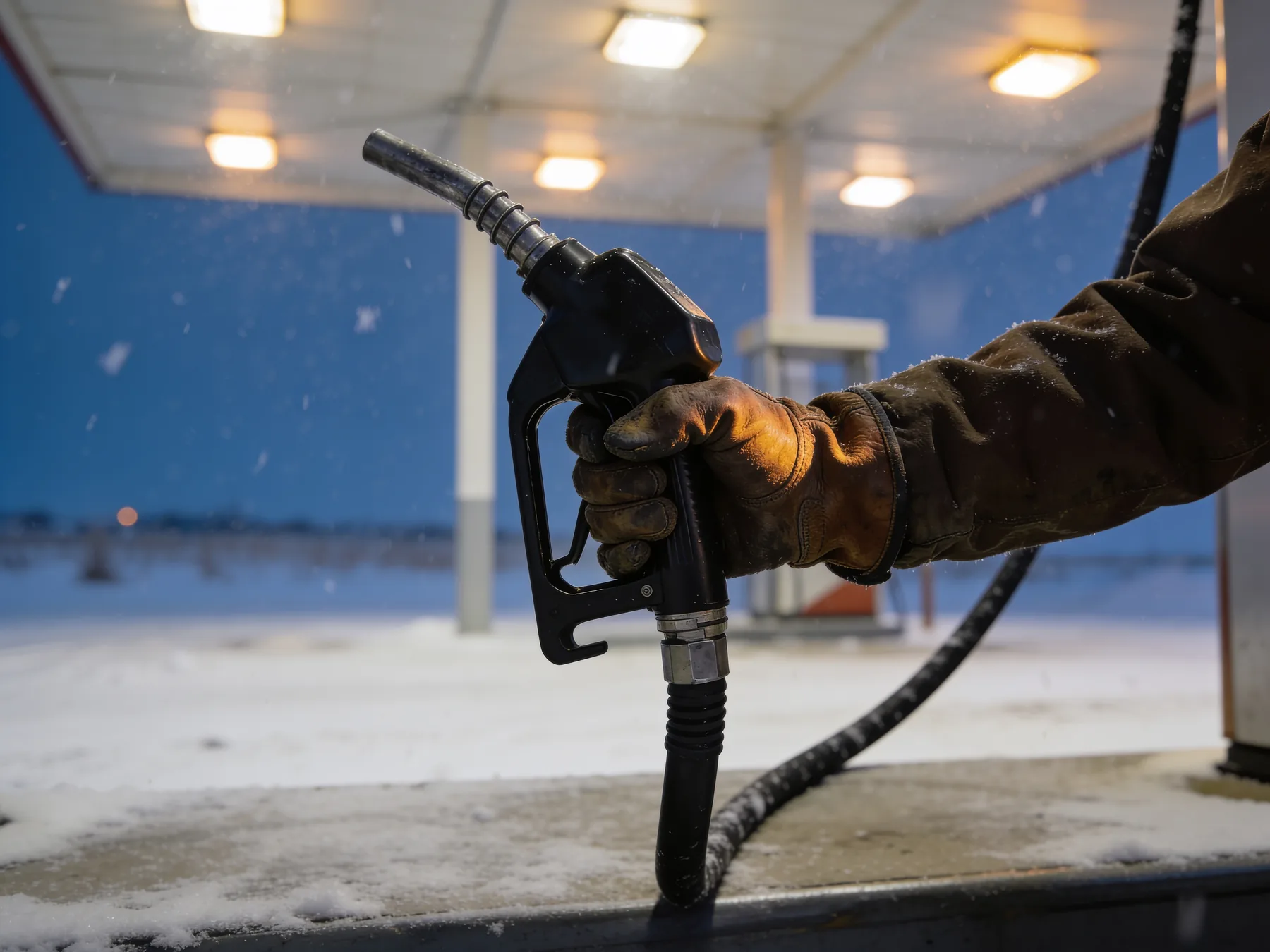
Statistics Canada's consumer price index for September, released on 19 October 2026, had gasoline up 27.8% on the year, after 22.8% in August. Crude oil reached its highest level since May, and only the switch to cheaper winter-blend gas moderated the rise. Alberta stopped collecting its 13-cent provincial fuel tax on 1 October, until the end of the year.
None of that changes a car payment. The car loan calculator will tell you the payment to the dollar, and it stays the same for the whole term. The fuel bill is the one beside it that moves every week, and for anyone weighing gas prices and a car loan, it is the number most likely to be guessed instead of worked out.
A loan application asks what you earn and what you already owe. It doesn't ask what you will spend at the pump, and the payment a lender approves doesn't include it. That leaves the fuel part of the budget to you.
It matters more than it sounds, because two vehicles with the same payment can burn very different amounts of fuel. A larger truck or SUV that is older, and so cheaper to finance, can cost more each month than a smaller, newer vehicle once both are driven. The payment comparison says one thing and the running cost says another.
You need three numbers: how far you drive in a year, how much fuel the vehicle uses, and a price per litre.
Then the arithmetic: kilometres a year, divided by 100, times litres per 100 km, times the price per litre. Divide by 12 for a monthly figure.
Here is an example with numbers picked for illustration rather than quoted. Two vehicles, each driven 20,000 km a year, with gas at $1.60 a litre:
The gap is about $120 a month. Over a 72-month loan, if prices stayed where they are, it adds up to about $8,640 that never appears in either payment. If the SUV's payment is $80 a month lower, the car is still the cheaper vehicle to own.
In Alberta and Saskatchewan the worst months for fuel are the coldest ones, and they are long. Natural Resources Canada's Auto$mart fact sheet on cold weather explains why:
So budget for winter separately. In the example, a 20% rise in a January month takes the SUV from about $333 to about $400, and the car from about $213 to about $256. If your budget only works on the summer number, it doesn't work.
The same fact sheet has the cheap fixes. Ten minutes of idling burns 0.25 to 0.50 litres, and idling for more than 30 seconds does nothing for the vehicle, so drive gently instead of letting it run. Check tire pressure at least monthly, since tires 8 psi low can raise fuel use by up to 4%. And plug in the block heater on a timer, set to come on about two hours before you leave.
Part of what you pay at the pump this autumn is lower because of a tax holiday, and holidays end.
In Alberta, the province suspended its 13-cent-a-litre fuel tax on gasoline and diesel from 1 October 2026, after West Texas Intermediate crude averaged $90.54 a barrel between 18 August and 15 September. The rate is reviewed every quarter, on 1 January, 1 April, 1 July and 1 October, and the province has said the tax won't rise by more than 9 cents a litre in any one quarter if oil prices fall. Ottawa has also suspended its federal excise tax on gasoline, worth up to 10 cents a litre, since April, and legislation introduced in September phases it back in. (Reported by Global News and BNN Bloomberg on 22 September 2026, from the Alberta government's announcement; checked October 2026.)
A loan runs for years and a tax holiday runs for months. When you work out your fuel budget, add the taxes back in. In the example, 13 cents a litre on 2,500 litres a year is $325, or about $27 a month on the SUV. Add the federal 10 cents and it is about $48 a month. That is the price the budget has to survive.
None of this means everyone should drive the smallest car on the road. Plenty of people in Alberta and Saskatchewan need a truck for work, a four-wheel-drive vehicle for a rural road, or room for a family. For them the point is to know the real number before signing, not after.
Some things that help:
The right vehicle is the one the whole monthly number supports, fuel included.
Before you apply, write down one monthly figure: the payment, from the calculator; insurance, quoted on the vehicle; fuel, worked out above at a winter rate with the taxes added back; and something for maintenance and a set of winter tires. If that total fits your income with room to spare, the payment fits too.
Lenders read the rest of the file in their own way, and what a lender weighs besides the credit score explains it. The fuel budget is the part only you can do, and it takes about ten minutes with a calculator.
When you're ready, the application takes about two minutes. After you apply, a finance specialist reads your application and responds within 24 hours.
Submitting an inquiry with Yes Auto does not trigger a hard credit pull on our end. However, once we match you with a dealer partner, that dealer or their lending institutions may perform a hard inquiry as part of the formal approval process.
What a lender requires for insurance on a financed car, why premiums jumped in 2026, and how to fit the bill beside the payment before you sign anything.

Financing an electric vehicle in Canada after the mandate changed: what a point-of-sale incentive does to a car loan, and why it is not a down payment.

The Bank of Canada rate hike of October 28 moves some car loan costs and leaves most alone. What changes, what doesn't, and whether waiting helps.
It opens a file, not a phone tree. It goes to one dealer partner at a time, where a specialist reads it — never a list.
Programs may vary by province. Approval is subject to lender review and application details.